
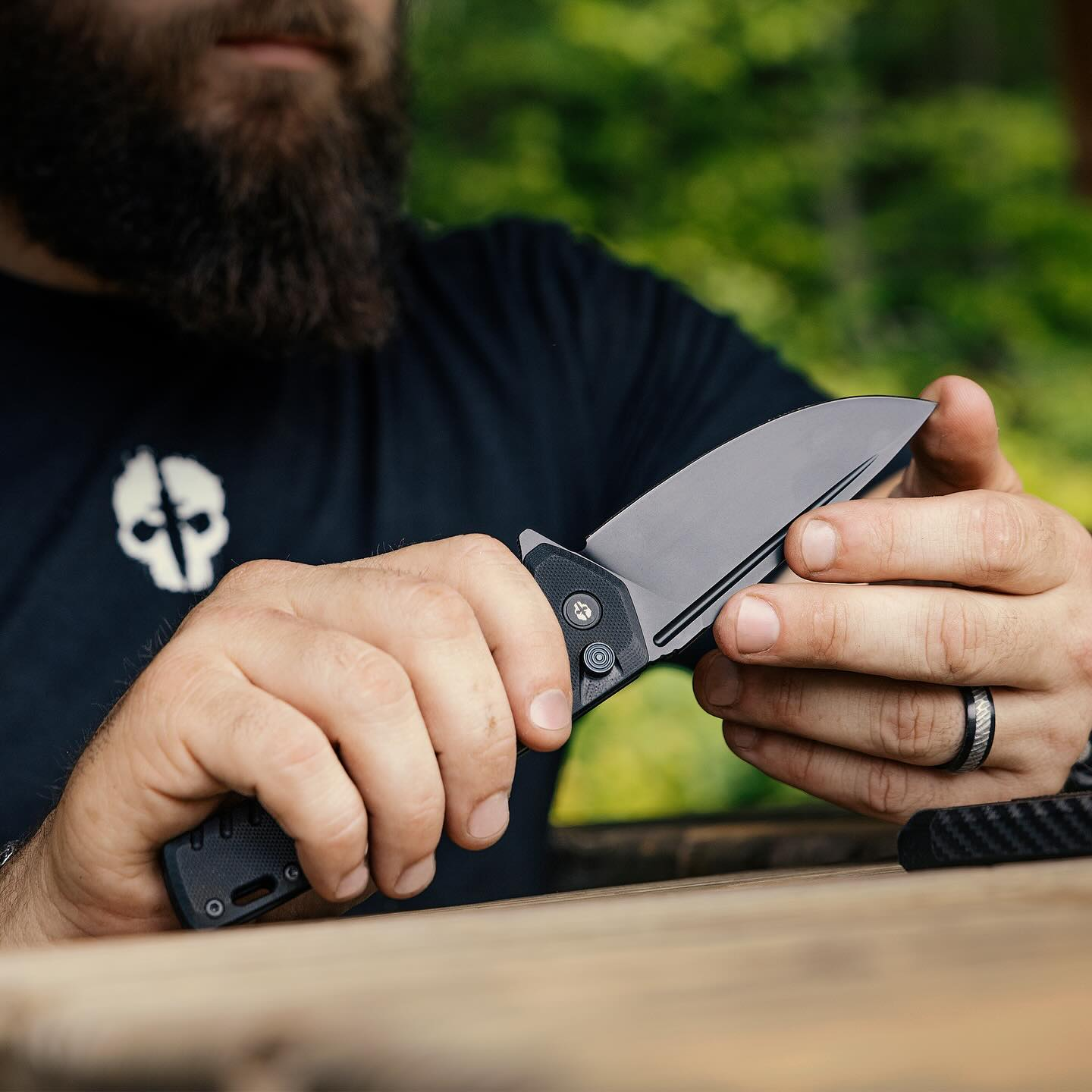
Survival skills are dependent on adaptability, awareness, and knowing how to use basic tools effectively. Among these tools would be the use of a knife, as one that is most versatile to have along. Knife skills can enhance confidence as it multiplies options in times of emergencies. Starting from making shelters to preparing food, the appropriate use of a knife ensures energy efficacy and safety. This article would shed light on how training in different methods can enhance skills for survival by relating to real-life scenarios that can be easily applied to them.
Precision Cutting for Safer Shelter Building
Shelters require more precision than speed. Certain knife skills would provide for controlled cuts, enabling one to clean branches, stakes, and cordage much better. Learning to carve notches, feather sticks, and support pegs enables survivors to assemble strong frames without exhausting themselves. Proper grip and angle of the blade minimize slips, which reduces the possibility of injuries under stress and pressure. Good carving saves material, thus allowing limited resources to go further. Muscle memory takes over by repeating these processes, allowing the user’s movements to remain steady even when cold or fatigued, factors that would normally impede coordination.
Efficient Food Preparation and Resource Use
Food preparation is still an essential aspect of survival, and mastering the use of a knife is essential. Skills like filleting fish, skinning game meat, and slicing plants for eating require finesse over brute strength. Using a sharp knife with trained hands helps prevent the loss of necessary nutrients. Smooth cutting action is also essential for proper hygiene. Hygiene is key in avoiding disease when proper medical attention is not imminent. When choosing equipment, most outdoors enthusiasts decide to invest in a durable OTF knife that offers quick deployment and reliable locking for controlled food tasks. Apart from blade style, consistent technique ensures meals are prepared safely and efficiently under pressure.
Fire Preparation Through Controlled Shaving
Fire provides warmth, security, and an even means for purifying water. Knife skills assist greatly in ensuring that raw wood can be converted into feasible tinder and kindling. The process of shaving curl layers off dry branches for creating feather sticks is also simple and can be easily set alight. It is also possible to learn skills for batoning wood in alignment, ensuring that even larger sections can be split without hurting the blade in the process. These skills reduce dependency on matches or lighters alone, offering multiple ignition options during damp conditions or extended stays outdoors.
Tool Maintenance and Edge Awareness
A knife only works when it is cared for properly. Comprehending the essence of edge geometry and sharpening means similar performance, no matter what. Learning how to hone a blade using stones, improvised materials, or strops offers a long-term way to rely on that blade. Likewise, it’s about understanding limitations; throwing the spine onto choppers rather than the edge of the blade executes that chore well and maintains sharpness. Cleaning off corrosion, particularly if exposed to moisture or organic matter, is a minimum course of care. With considerate service, the knife will remain a trusty extension of the user’s skill set, not some fragile accoutrement to that skill set.
Problem Solving and Defensive Readiness
Aside from actual survivable tasks, knife skills underscore creativity in problem-solving. A knife is a great help in building traps, fishing spears, or signaling devices. Each of these needs some planning and flexibility in approach, all of which go back to emphasizing a survival attitude. Being ready to defend is also a byproduct of learning that involves situational awareness and responsible handling. Awareness of reach distance, transitional grip work, and controlled motion correlates well with confidence rather than impulsiveness.
Knife skills are improved to add survival prowess by focusing on efficiency, care, and accuracy. Every technique mentioned above shows how knowledge can turn a simple survival tool into a useful survival asset. Whether it is creating shelter or preparing meals, using a survival tool such as a knife properly results in energy conservation, as well as risk reduction. Survival preparation knowledge extends tool life, while applications range from numerous to endless when it comes to facing survival challenges effectively.
read more : https://sumosearchpro.com/
